
Last updated November 23, 2026
 Sweep & inspection
 Caps & crowns
 Flue relining
 Masonry repair
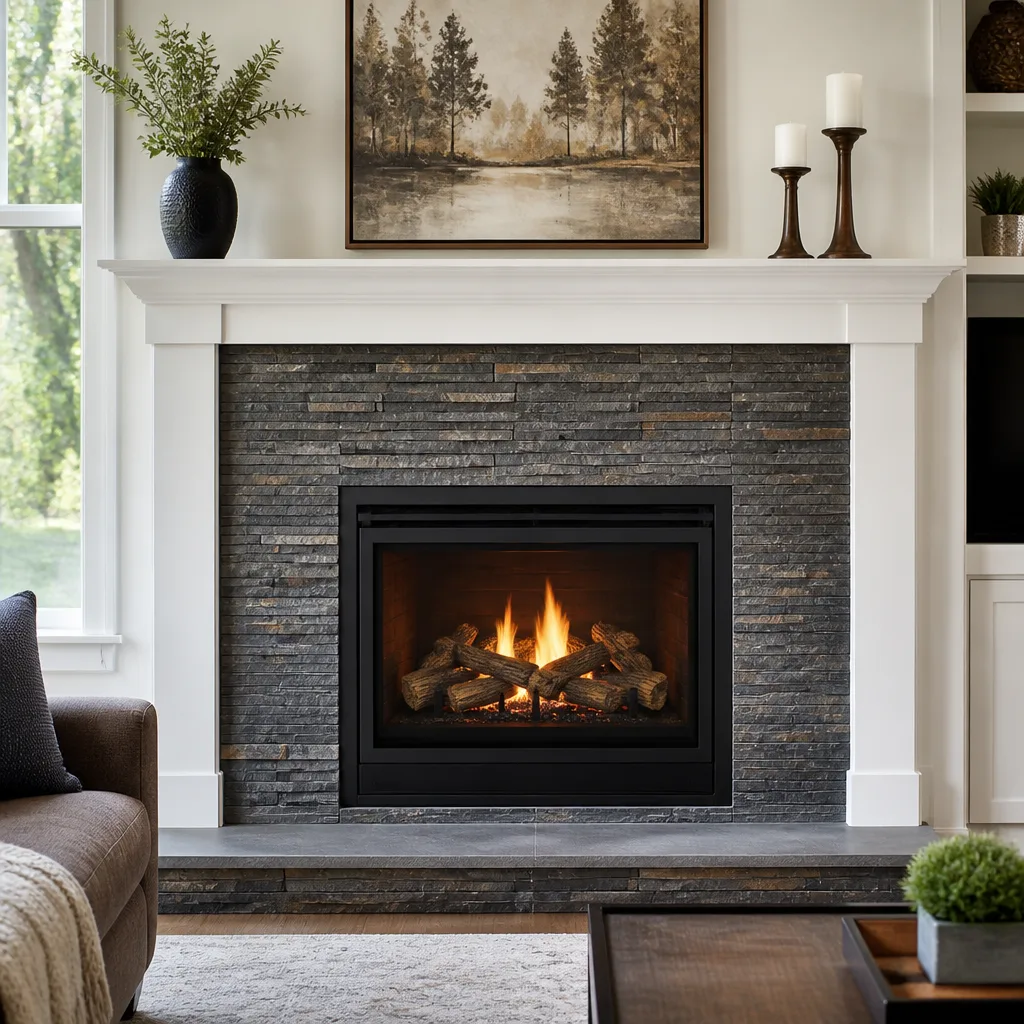 Gas fireplace service
Level 1 sweep and inspection to the NFPA 211 annual standard - flue, crown, cap, and flashing checked and photographed
Chimney sweep logs do not sweep chimneys. They loosen some creosote - which then falls where a brush and vacuum still have to collect it.
Chimney Cleaning Warning Signs: A Seven Hills Homeowner’s Reference Guide
Most homeowners assume a chimney problem announces itself with smoke rolling into the living room or a roar you can hear from the driveway. In our experience, that’s not how it usually works. The signs that matter most show up quietly: a faint campfire smell in a closed house in July, a palmful of black flakes on the firebox floor, a chalky white stain on the brick someone told you was “just weathering.” A strong campfire odor in a closed house during the off-season isn’t nostalgia. It’s negative draft pressure pulling air backward through a creosote-coated flue, and it means the chimney is venting the wrong building in the wrong direction. This guide teaches you to read what you’re already seeing and smelling so you can tell the difference between a maintenance item and a stop-use-now situation. We’ve built it from the perspective of a Seven Hills chimney specialist because that’s the climate and housing stock we work in.
Quick Answer
The most reliable chimney cleaning warning signs are: a strong campfire or soot smell inside the house when the fireplace is cold, smoke that’s slow to draw or rolls out of the firebox during startup, black or glazed deposits visible in the flue, a palmful of soot or creosote flakes on the firebox floor, and exterior masonry staining or crumbling mortar. Any one of these means the chimney needs an inspection before your next fire. If you see a thick, shiny, tar-like glaze in the flue, smoke backing into the room persistently, or loose masonry on the chimney exterior, stop using the fireplace until it’s been looked at by a trained professional.
Styles & brands we work with
- Sweep & inspection
- Caps & crowns
- Flue relining
- Masonry repair
- Gas fireplace service
Table of Contents
- Reading Creosote: First, Second, and Third Degree
- What Your Smoke Is Telling You
- Exterior Masonry Signs in Colorado’s Freeze-Thaw Climate
- Odor Diagnostics: Creosote vs. Moisture vs. Animals
- Monitor-and-Schedule vs. Stop-Use-Immediately
- A Seven Hills Seasonal Checklist
- Why Inspection Comes Before Sweeping
Reading Creosote: First, Second, and Third Degree
Creosote is the material that matters most in a wood-burning chimney, and you don’t need special tools to make a first judgment about it. You need light, a mirror angled into the firebox, and a rough sense of how much of the flue you can see. What you’re looking at is a byproduct of incomplete combustion, and its texture tells you something about how the fire has been burning.
First-degree creosote is a light, dusty soot with a flaky texture. It brushes off easily during a normal sweep, and small amounts are normal in any wood-burning system. A thin coating is the baseline, not the alarm. When you start seeing build-up that’s more than a dusting, you’re moving into a range that needs attention at the biannual or annual level.
Second-degree creosote looks like black, hardened flakes or a crust that sticks to the flue wall. It doesn’t brush off. It takes a proper sweep with the right tools to break it loose, occasionally more than one pass. This is where combustion quality starts to matter: wet wood, a choked damper, a fire that smolders instead of burning hot, all push you from first to second degree faster than clean, dry wood and good airflow would.
Third-degree creosote is the tar-like glaze. It looks like black candy varnish, shiny when the light hits it, and it’s the stage where the risk curve steepens. This is the layer that fuels chimney fires because it ignites readily once it builds up. Third-degree creosote is not a homeowner-removable problem. It needs professional equipment and often a chemical treatment to break it down safely.
- First degree: dusty, flaky, brushes off. Normal in small amounts.
- Second degree: black flakes or crust, doesn’t brush away. Book a sweep.
- Third degree: shiny, tar-like glaze. Stop using the fireplace until inspected.
What creosote can’t be removed with a chimney brush alone typically calls for the same professional tools a sweep carries, and if a flue’s interior is too pitted or cracked to clean safely, that’s when a liner restoration system like HeatShield enters the conversation. In Seven Hills, where many homes sit above 5,500 feet and the firebox behaves a little differently at this altitude, we see second- and third-degree build-up more often than the flat-rate charts would suggest. Cooler, shorter, more efficient fires that go out before they burn clean produce more creosote per cord than a hot, sustained burn.
What Your Smoke Is Telling You
Smoke is the chimney’s body language. It shows you, in real time, whether the system is drafting correctly or fighting itself. Most of what homeowners describe as “the chimney doesn’t work sometimes” resolves into one of a handful of distinct behaviors, and each points in a different direction.
Smoke that’s slow to draw on startup is often a cold-flue problem rather than a blockage. The flue needs to warm before it pulls reliably, especially in shoulder seasons when the outdoor temperature in Seven Hills isn’t far from the indoor temperature. Pre-warming the flue with a rolled newspaper torch held near the damper (not inside the firebox) usually solves it. If it doesn’t, the flue may be oversized for the appliance, or there may be a partial obstruction.
Backdrafting is air moving down the flue and into the room rather than up and out. It usually points to an undersized or short flue, a house that’s tighter than the chimney can overcome, or competing exhaust fans pulling air from the same room. Modern tight construction in the newer Seven Hills subdivisions can produce this more often than people expect.
Smoke rollout at the firebox, where a puff of smoke escapes past the damper and into the room when you open the door, is a different animal. It often means a flue restriction, a partially closed or broken damper, or an offset in the flue that’s collecting debris. Smoke rollout is the sign we take most seriously short of an actual visible fire in the firebox.
- Slow draw on startup: usually cold flue. Pre-warm, then try again.
- Persistent backdrafting: flue sizing, house tightness, or competing fans. Needs diagnosis.
- Rollout at the firebox: restriction or damper problem. Stop and inspect.
- Smoke that only happens on windy days: top-of-chimney issue, cap or crown geometry.
Windy-day smoke is its own signal in Seven Hills, because the town sits at the mouth of the foothills where wind patterns shift quickly. If smoke only misbehaves when the wind is out of the west, the flue termination is the place to look first, and a properly sized cap is often the difference.
Exterior Masonry Signs in Colorado’s Freeze-Thaw Climate
Seven Hills sits in a climate that stresses masonry in a particular way: wide swings between warm afternoons and freezing nights, especially in late fall and early spring. Water that gets into brick or mortar joint during the day freezes overnight, expands, and pries at the material from the inside. Over seasons, that cycle produces a set of exterior signs that don’t happen as fast in milder climates.
Spalling is the flaking or popping-off of the brick face. It looks like a brick with a corner missing, or a shallow crater where the surface used to be. Spalling brick has absorbed water and is failing from the freeze cycle. A few spalled bricks on the chimney exterior is common in Seven Hills. A pattern that’s concentrated near the top or around the crown is worth a look.
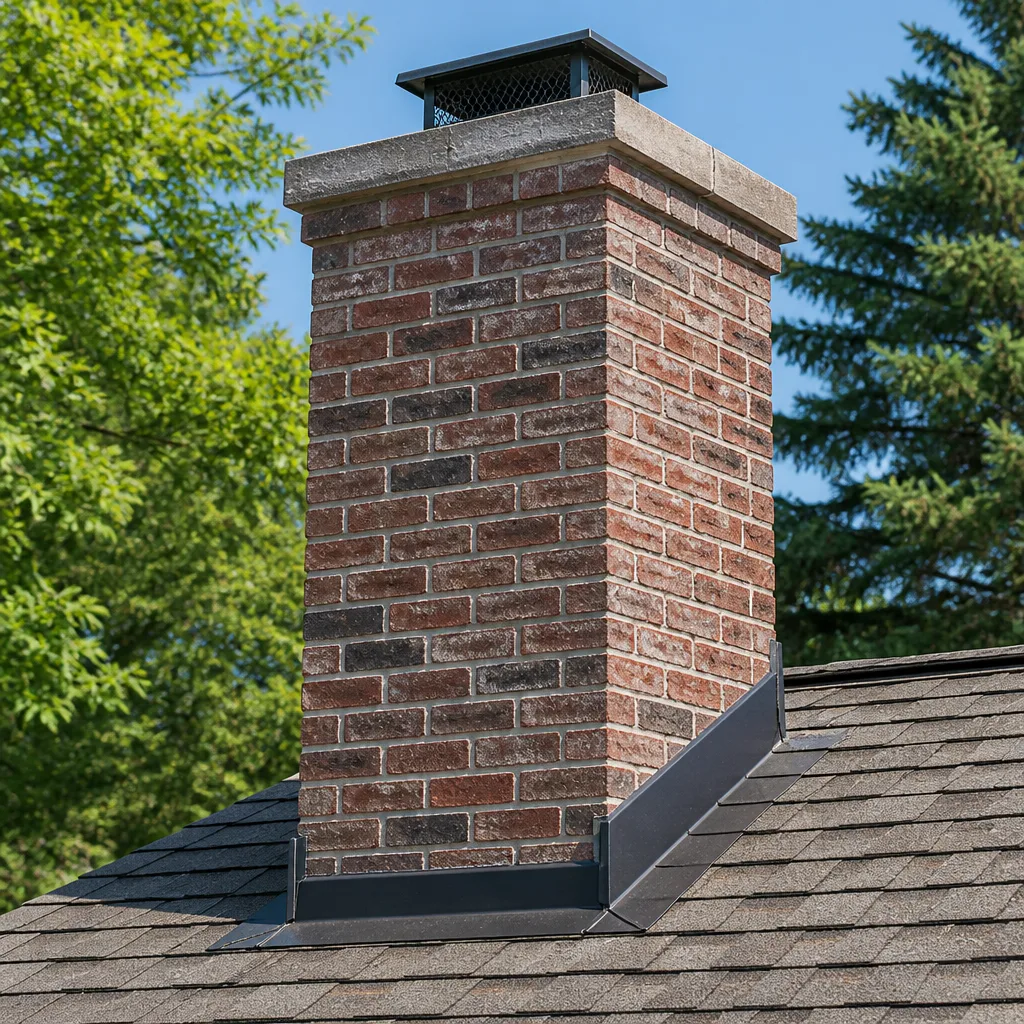
Mortar joint erosion shows as mortar that’s receded between the bricks, leaving them sitting proud like teeth. It’s sometimes called “pointing loss.” When the mortar is worn back far enough, water gets in behind the brick, and the freeze-thaw cycle accelerates. Repointing is the fix, and it’s cheaper than rebuilding.
Efflorescence is the chalky white staining on brick or mortar. It’s mineral salt pushed to the surface by water moving through the masonry and evaporating. Efflorescence itself is harmless, but it’s a truthful indicator that water is passing through a chimney wall, and water is the beginning of most structural problems we end up fixing.
- Spalling brick: flaking or cratering of the brick face. Sign of absorbed water and freeze damage.
- Mortar joint erosion: recessed mortar. Water entry point. Repointing territory.
- Efflorescence: chalky white staining. Harmless itself, but a water-trail indicator.
- Rust stains on the firebox or damper: water getting into the system from above.
- Cracked crown: the concrete cap at the top of the chimney. Any crack lets water straight into the flue.
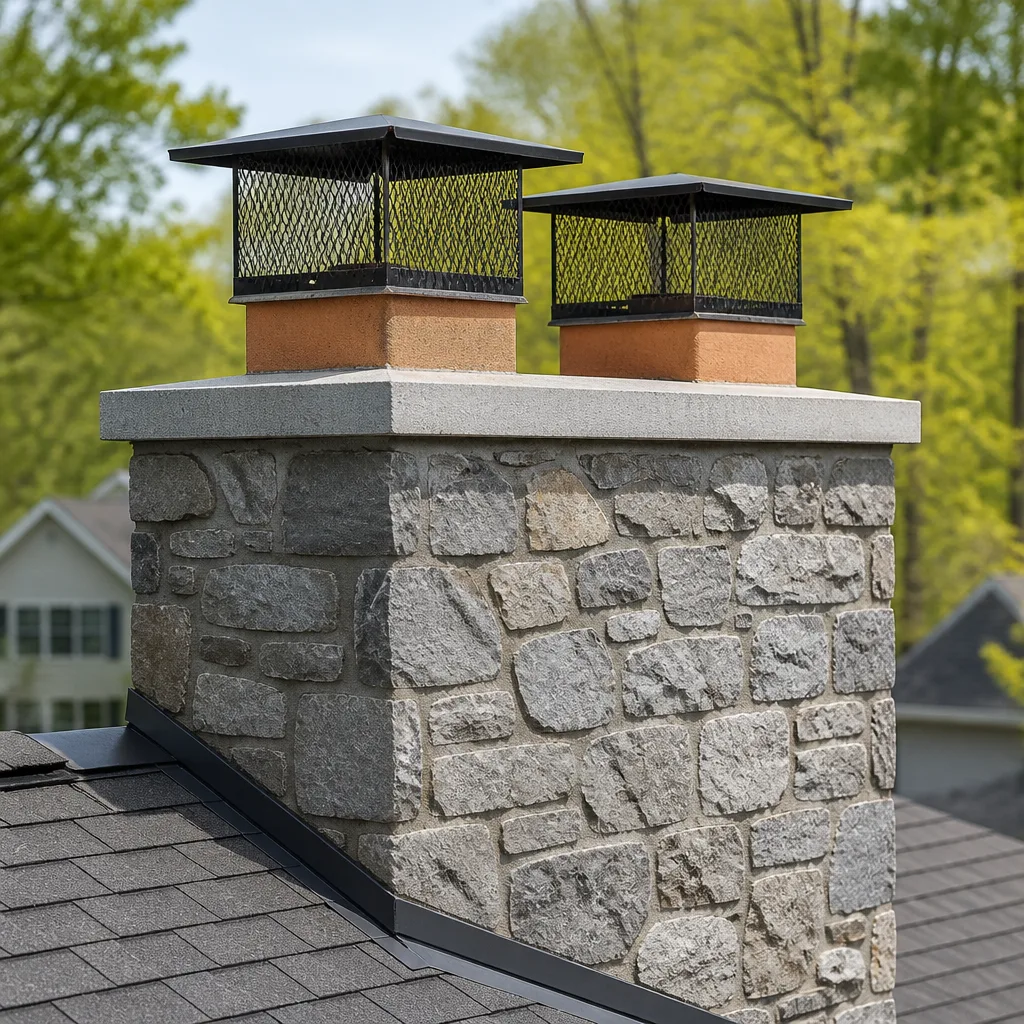
A cracked crown is the single most common water-entry point we find on Seven Hills chimneys, and it’s also one of the easiest things to fix before it becomes a masonry rebuild. If your crown is cracked or spalled, that’s the “schedule it before next winter” category, not the fire department call, but it’s genuinely worth handling on your own timetable instead of the weather’s. Our chimney cap & crown work addresses these entry points directly, and it’s the kind of repair that goes quickly when it’s caught early.
Odor Diagnostics: Creosote vs. Moisture vs. Animals
Your nose is a legitimate diagnostic instrument. Chimney problems produce distinct smells, and telling them apart tells you what kind of problem you’re having. This is the part of a warning-sign checklist most guides skip, and it’s the part that saves the most unnecessary service calls.
Creosote smell is a smoky, campfire, “barbecue in the living room” odor. It’s strongest on warm days, in the off-season, or when the house is running exhaust fans, and it’s the classic sign of negative draft pressure pulling flue gases down through a poorly sealed system. In our experience, a homeowner who calls in July about a “smoky smell from the fireplace” is almost always describing creosote odor, and it usually means the flue is heavily coated and the house has lost its neutral pressure. Cleaning the flue removes the source; the negative-pressure question often stays behind and needs its own answer.
Moisture or mold smell is musty, damp, and earthy, closer to a basement than a campfire. In Seven Hills, this almost always means water is entering the flue, most often through a failed crown, a missing or undersized cap, or deteriorated flashing at the roofline. Sweeping doesn’t fix a moisture smell; finding and stopping the water source does. That’s the difference between calling a sweep and calling a chimney repair specialist, and understanding which problem you have keeps you from paying for the wrong one twice.
Animal intrusion is the easiest to identify and the least fun to confirm. It smells like a rodent or bird, sounds like scratching or fluttering when the house is quiet, and often comes with visible nesting material on the smoke shelf or firebox floor. A missing cap is the usual cause. Seven Hills has plenty of birds and squirrels that find an uncapped chimney quickly, and once they’re in, they leave droppings and nesting material that need to be removed, not just swept around.
- Campfire / barbecue smell: creosote plus negative pressure. Book a sweep and ask about the draft.
- Musty / damp / earthy smell: water entry. Inspect crown, cap, and flashing.
- Animal smell / scratching sounds: intrusion through an uncapped flue.
- Gas smell near a gas fireplace or appliance: stop and call a professional. This is a safety call, not a cleaning call.
One case deserves special mention: a gas smell near a gas-log fireplace or a gas appliance attached to the chimney is a stop-everything call to your gas utility first. It’s not a chimney cleaning matter, and no sweep should proceed until the gas side is verified safe. We get this right because we specialize in chimney and fireplace systems, not general contracting, and we know the boundary between what we’re equipped to handle and what belongs to someone else.
Monitor-and-Schedule vs. Stop-Use-Immediately
The hardest part of reading warning signs is knowing when to relax and when to close the damper for the season. Here’s how we sort them. This isn’t a comprehensive review list, but it covers the calls homeowners make most often, and it’s the framework we use when we walk a Seven Hills homeowner through their own system.
Monitor-and-schedule signs are things that are going the wrong direction but aren’t yet dangerous:
- Light soot or first-degree creosote in the firebox.
- A thin crust of second-degree creosote visible on the flue wall.
- Occasional slow draw on startup that pre-warming resolves.
- Mild efflorescence with no spalling or mortar erosion.
- A smoky smell only on warm or windy days, not year-round.
- A few spalled bricks on the exterior.
These are “call and book an inspection before your next burn season” situations. Don’t wait for a warning sign to get worse, but you don’t need to panic about them either. In Seven Hills, with our June-through-September off-season, the smart timing is to get the inspection onto the calendar in the spring or early summer so the work happens when the schedule is open.
Stop-use-immediately signs are the ones to act on today:
- A visible third-degree tar glaze in the flue.
- Persistent smoke rollout into the room, not just at startup.
- Smoke or soot visible outside the chimney at the top during a fire.
- Any spillage of combustion byproducts you can sense in the living space (a haze, a metallic taste, headaches when the fire is burning).
- Loose masonry or a leaning chimney.
- A cracked or missing crown you can see from the ground.
- A strong gas smell near a gas fireplace.
Stop-use signs mean stop burning wood. Not reduce, not “keep it small until spring.” Stop. Carbon monoxide is a legitimate hazard whenever combustion byproducts can vent into a home, and it’s the reason we treat rollout and backdrafting as urgent rather than routine. If you have a carbon monoxide alarm and it’s ever gone off while the fireplace was burning, treat that as an immediate stop-use and call us.
A Seven Hills Seasonal Checklist
A homeowner’s chimney checklist isn’t complicated. Here’s the short version that fits how a Seven Hills house actually gets used, with our climate in mind.
- Before burning season (late August to early October): look inside the firebox and up the flue with a flashlight. Confirm the damper opens and closes smoothly. Check the crown and cap from the ground with binoculars if you can. Confirm a carbon monoxide alarm is on each level of the home and functioning.
- First fire of the season: watch for slow draw and rollout. Smell the room after the fire dies down. Any strong smoke smell in the room is worth a call.
- Every few fires: look for buildup on the firebox walls and the smoke shelf. A handful of soot is normal; a flaky crust is a sweep signal.
- After a snowmelt or a spring rain: check the exterior masonry for new efflorescence, spalling, or mortar erosion. Look at the crown after any hard freeze.
- Spring close-out: sweep the firebox and give the system the last look of the season before summer. This is when a smoky smell in July gets caught before it’s a surprise.
One Seven Hills-specific note: our elevation and our dry springs mean wood dries out here differently than it might in lower-altitude towns. Wood that “looks dry” can still be above 20% moisture if it’s been stored in a damp shed or under a cover that traps humidity. Wet wood is the leading cause of second- and third-degree creosote, and it’s the cheapest warning sign to fix. If you’re not sure about your wood, season it longer.
Why Inspection Comes Before Sweeping
A chimney sweep isn’t a scrub-brush pass. A proper sweep starts with a visual inspection, and any chimney professional who skips that step is doing half a job. You can’t sweep what you haven’t seen, and you can’t tell a homeowner what they need until you’ve seen the flue, the damper, the firebox, the smoke chamber, the crown, and the cap.
That’s why we open every job with an inspection and only then sweep. The inspection is where we find the things a brush would miss: a cracked flue tile, a warped damper, a failed crown that’s been letting water in for years, a bird’s nest that a brush would just break apart, third-degree creosote that needs treatment before it’s safe to sweep.
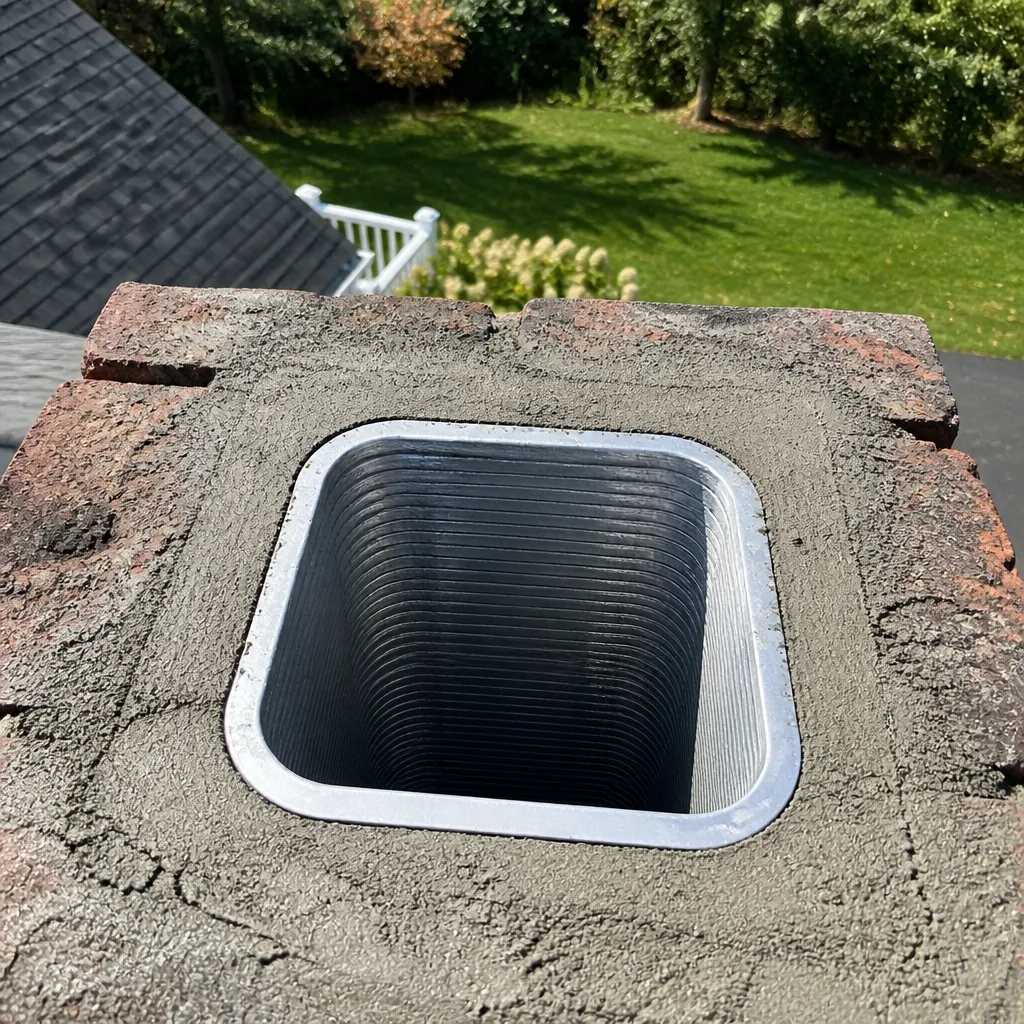
One of the reasons we’re strict on this is because we’ve seen what happens when it’s skipped. A sweep-only call on a chimney with a cracked flue tile sends a flaky brush up a flue that’s already compromised, and the homeowner walks away believing the system is clean and safe when neither is true. We’re not a sweep-only crew because Seven Hills homeowners deserve a full read on their system, not a surface pass. If the inspection finds a problem, the fix lives inside the same organization. We install professional-grade liner systems like DuraFlex on relining jobs, we do HeatShield resurfacing on liners that are still structurally sound but need a new interior surface, and we install caps and crowns matched to the chimney’s actual dimensions instead of whatever happens to be on the shelf. That’s full-service specialist territory, and it’s why the inspection matters as much as the sweep itself.
If you’re not sure where to start, a chimney sweep is usually the right first appointment. It includes the inspection, and the technician will tell you honestly whether anything else needs doing.
Common Mistakes to Avoid
- Treating a smoky smell as a “winter thing.” A campfire odor in a closed house in July is a draft and creosote signal, not a seasonal quirk. Waiting until the first cold snap to call puts you on the busiest schedule of the year.
- Burning unseasoned wood because it was cut locally. Local sourcing doesn’t mean dry. In Seven Hills, the dry climate tempts homeowners to assume wood is ready before it is. Wet wood builds creosote faster than anything else you can do to your chimney.
- Sweeping before inspecting, or letting someone sweep without looking first. If a crew arrives and goes straight to the brush without a full visual, call a different crew. You can’t sweep what you haven’t seen.
- Using a general handyman for chimney work. Chimney repair isn’t a general contracting job. The materials and the tolerances are specific. We stock and install from a curated set of professional brands including Copperfield, DuraFlex, Gelco, Olympia Chimney, Famco, and HeatShield for exactly this reason: the wrong material in a Seven Hills freeze-thaw chimney fails predictably.
- Ignoring the crown because the fire burns fine. A cracked crown lets water in every storm season, and the fire can burn fine right up to the day it can’t. The crown is the chimney’s roof. Water entering through it is the start of most expensive repairs we see.
- Ignoring efflorescence because it “looks like chalk.” The stain itself is harmless, but it’s water telling you it’s moving through the wall. That’s a “find the source” sign, not a “wait and see” sign.
- Letting a stop-use sign go until it becomes an emergency. Third-degree creosote, persistent rollout, and loose masonry are today’s calls. Carbon monoxide is a genuine risk when combustion byproducts back into the living space, and no fire is worth that.
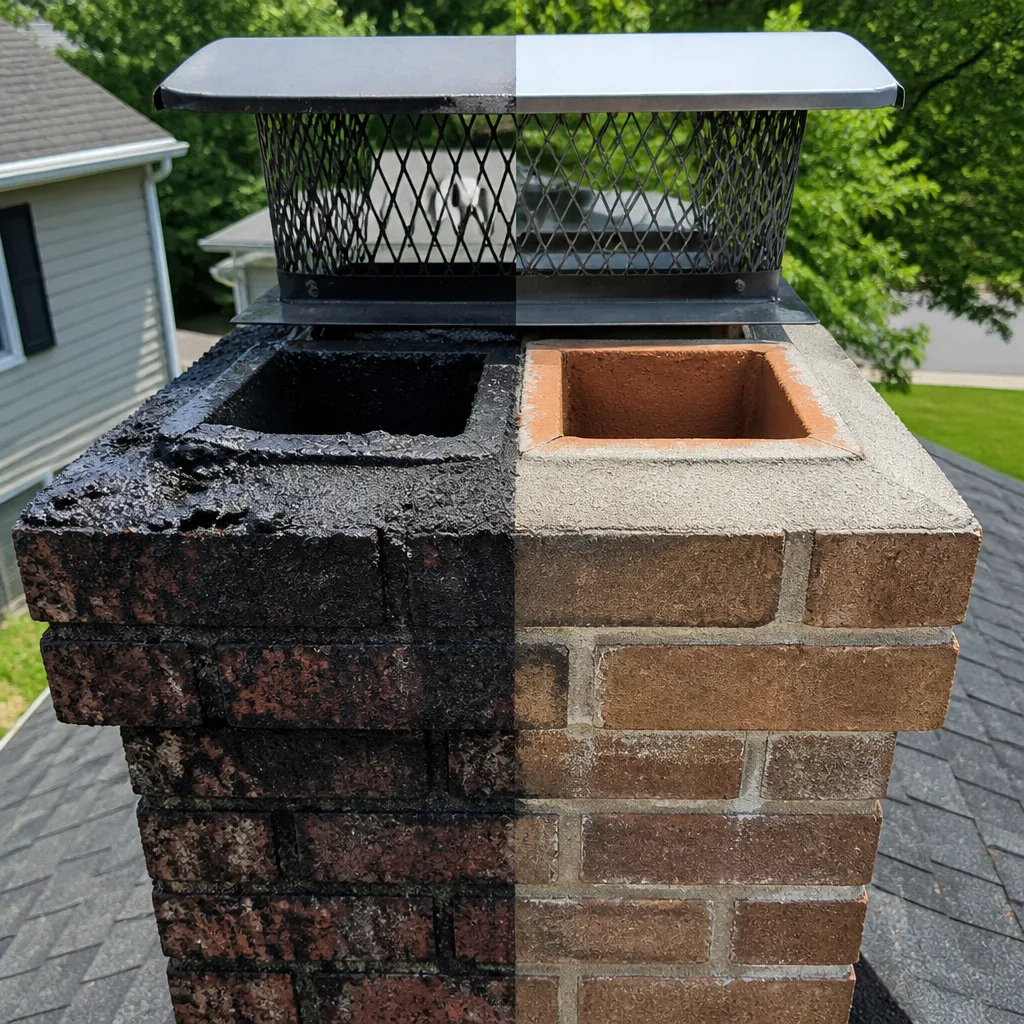
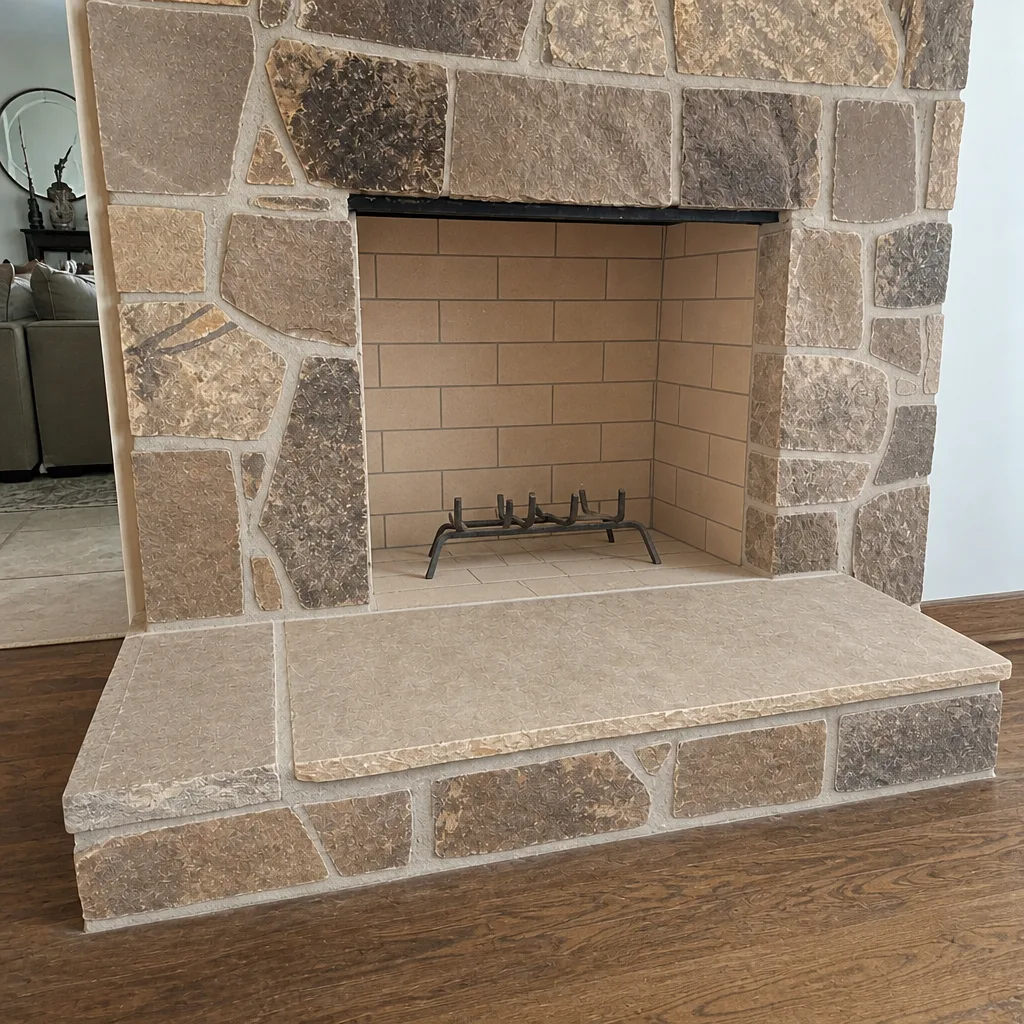
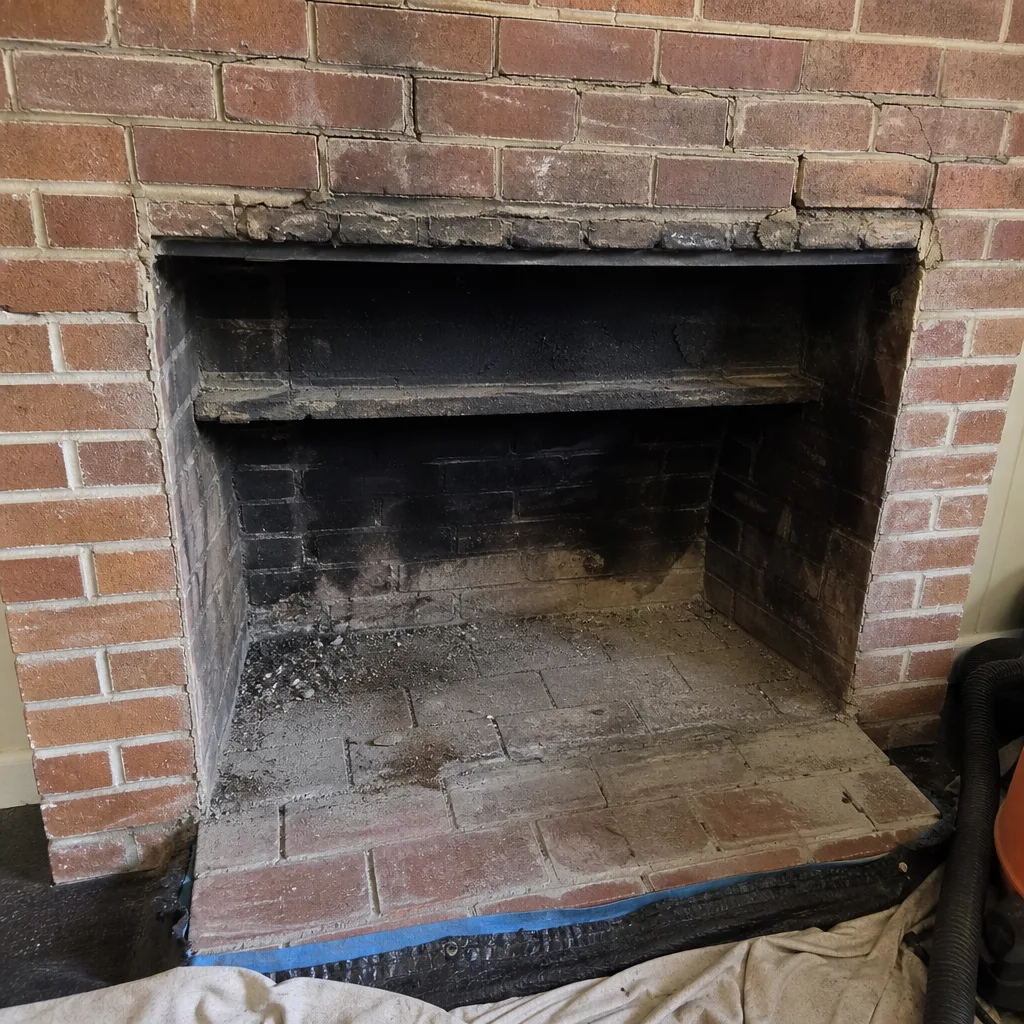
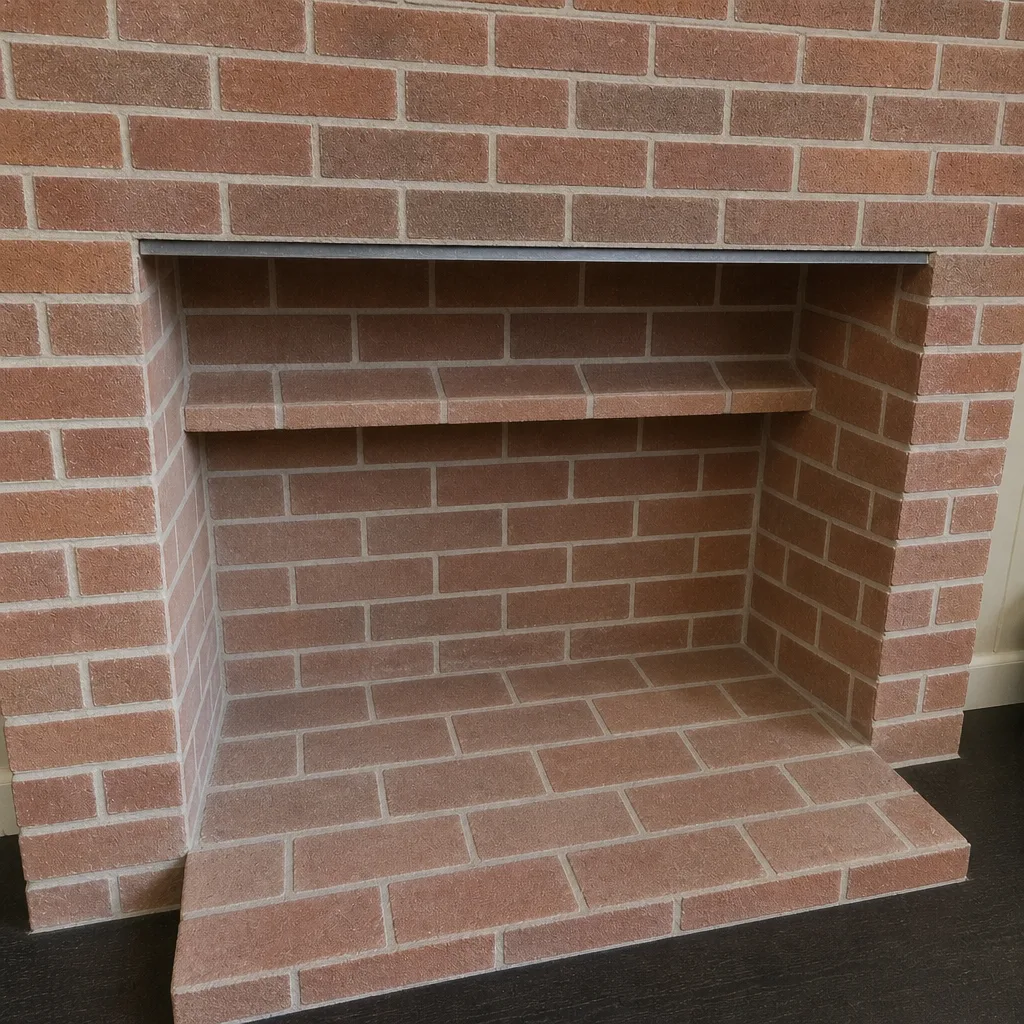
See the difference
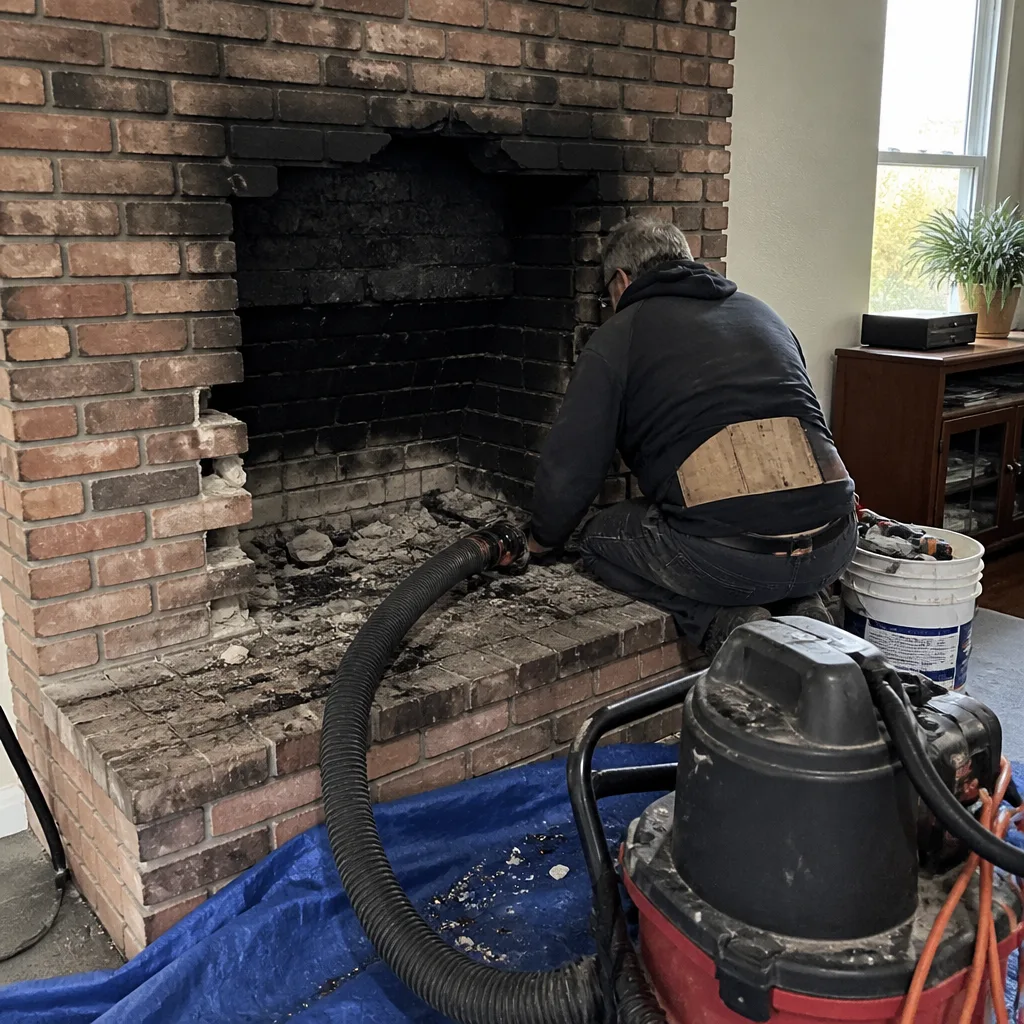 Before
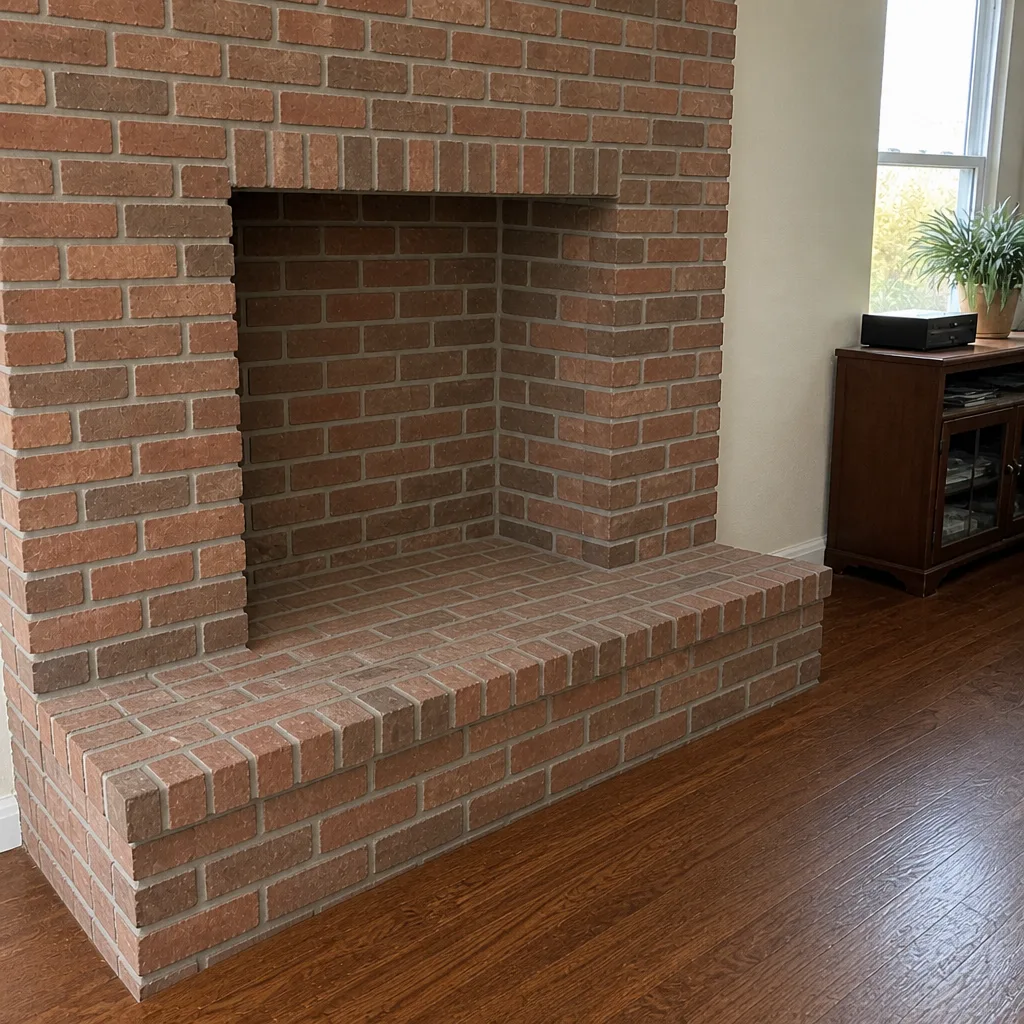 After
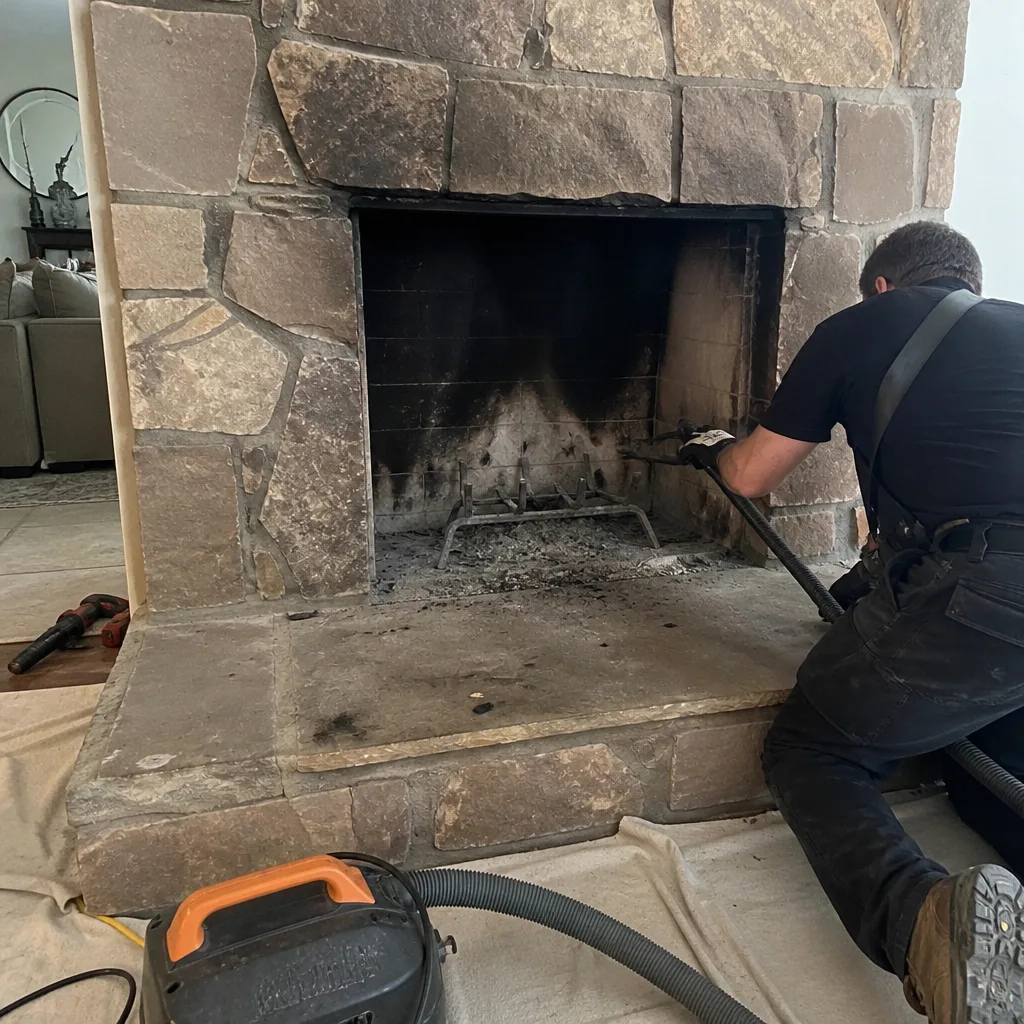 Before
 After
 Before
 After
When to Call a Professional
Call a professional chimney specialist in Seven Hills if you see any second- or third-degree creosote, any smoke rollout at the firebox, any persistent campfire smell in the house, any visible exterior masonry damage that’s more than a couple of spalled bricks, or any odor that’s musty rather than smoky. Call us if a carbon monoxide alarm has ever gone off while the fireplace was burning. Call us if the chimney leans. Call us if you bought the house and don’t know the chimney’s history, because a first-year inspection establishes the baseline and catches what the seller’s disclosure never covered.
You can’t sweep what you haven’t seen, so the inspection is the appointment that anchors everything else. Chimney Sweep Seven Hills offers free estimates in Seven Hills. Call (866) 937-8581. We answer 24/7. Fast dispatch from 7am to 7pm, Sunday through Friday. If a call comes in outside dispatch hours, we book it into the next opening, and you’ll get a clear scheduled window rather than a vague promise. Your written estimate sets the final price per job, and nothing gets recommended that isn’t backed by camera footage you can see for yourself.
Frequently Asked Questions
Once a year is the standard for a wood-burning fireplace in regular use, and twice if you burn frequently or notice heavy build-up. If you’re burning cord after cord through the winter, especially in a Seven Hills home that’s sealed tightly, the annual sweep is a floor, not a ceiling. A quick spring inspection tells you whether you’re due for a second pass.
A smoky smell when the fire is off usually means creosote build-up combined with negative draft pressure pulling air down through the flue. It’s strongest on warm days, which is why it shows up in the off-season. This is a pretty reliable signal that the flue needs a sweep and the pressure balance of the house needs a look. Call (866) 937-8581 for an exact quote, and estimates are free.
If the flue wall shows a shiny, tar-like glaze that reflects a flashlight beam, that’s third-degree creosote, and it’s a stop-use situation until it’s been professionally treated. Black flaky crust that won’t brush off is second degree and needs a sweep. Light, dusty soot is first degree and usually normal. When in doubt, stop burning and book an inspection rather than guessing from a flashlight.
No, and we’d discourage it. The crown is a concrete cap that has to be shaped to shed water, bonded to the flue, and cured correctly in a Colorado freeze-thaw climate. A crown that’s applied wrong will crack again within a season or two. This is one of the chimney cap & crown jobs we handle as routine work, and it’s far cheaper done once than done twice.
Smoky is creosote; musty is water. A campfire odor means the flue has build-up and the system’s draft is inverted, while a musty, earthy smell almost always means water is entering through the crown, cap, or flashing. They’re different problems that need different fixes, and treating one as the other is one of the most common reasons a homeowner pays for a sweep that doesn’t resolve the issue.
Call a full-service chimney specialist, not a general handyman. Chimney systems fail as systems, and the fix has to account for flue, firebox, liner, crown, and cap together. If you’re seeing any warning sign that’s more than routine soot, our fireplace repair team is who you’ll be talking to, and the first step is a proper inspection. Call (866) 937-8581 for a free estimate.
The Bottom Line
Chimney warning signs are a language. First-, second-, and third-degree creosote describe how poorly the fire has been burning, not whether it’s been burning at all. Smoke behavior tells you whether the system is drafting the way it should. Exterior masonry tells you how the climate has been treating the structure. Odors tell you which problem you have. Learn the vocabulary and you’ll stop guessing about your fireplace. When something lands on the stop-use side, don’t push through it; a real maintenance item becomes a real repair on the schedule of the weather, not yours. When it lands on the monitor side, book it before the season closes, and don’t let it get worse between visits. For a full-service read on your chimney, our full-service Chimney Sweep Seven Hills read is the honest place to start.
Chimney Sweep Seven Hills provides chimney sweeping, chimney inspection, fireplace repair, chimney repair, and chimney cap and crown installation throughout Seven Hills. We use professional-grade systems, including HeatShield liner resurfacing and DuraFlex flexible liners, because the right material in a Seven Hills freeze-thaw climate outlasts the wrong one every time. Our technicians have up to 10 years of experience, and every job starts with an inspection you can see for yourself.
Call (866) 937-8581 for a free estimate. We answer 24/7. Fast dispatch from 7am to 7pm, Sunday through Friday.
Written by the team at Chimney Sweep Seven Hills.